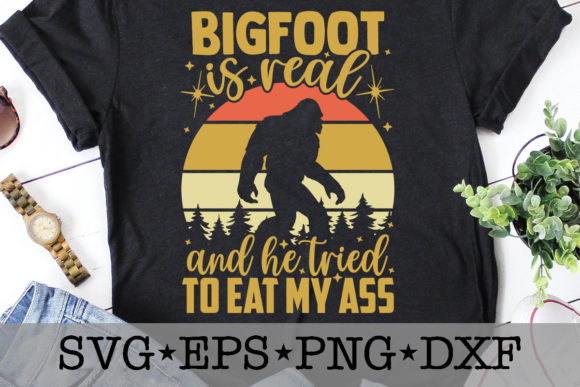
Bigfoot Is Real and He Tried to Eat My
Let’s be real: I’ve stitched hundreds of quirky, tongue-in-cheek designs for small shops, Etsy sellers, and custom gift clients—and Bigfoot is Real and He Tried to Eat My landed on my screen with that rare mix of boldness and charm that makes you pause mid-scroll. As a designer who evaluates embroidery files not just for aesthetics but for stitchability, wearability, and market fit, I opened this one expecting campy fun—and found something more: a surprisingly versatile, conversation-starting graphic that works *if* you treat it like the handmade product it’s meant to become—not just a digital file.
A First Stitch Through the Woods
I tested Bigfoot is Real and He Tried to Eat My on a heavyweight organic cotton tote bag—exactly the kind I stock in my own craft shop. The design’s layout immediately made sense: centered, slightly oversized, with generous negative space around the text and Bigfoot’s loping silhouette. It’s not fussy. No tiny antlers or intricate fur texture to vanish under dense fill stitch. Instead, it leans into confident line work and bold, readable lettering—ideal for satin-stitched outlines and clean fill areas. That’s huge. Too many “funny” T-shirt designs collapse when translated to thread, but this one holds its shape, even at 4.5 inches wide.
Where It Shines (and Where It Whispers)
Bigfoot is Real and He Tried to Eat My excels on structured, medium-to-heavyweight fabrics: canvas totes, fleece-lined sweatshirts, denim jackets, and sturdy tea towels. On a black hoodie? The high-contrast vector lines pop without needing underlay overkill. On a natural linen apron? It reads as artisanal, not cartoonish—especially when stitched in olive green or charcoal gray thread.
It also lands well for baby embroidery—but carefully. I ran a scaled-down version (3.2") on a cotton knit onesie using lightweight cutaway stabilizer and reduced stitch density. The phrase stayed legible, and Bigfoot’s simplified form avoided the “blobby” look that plagues overly dense small-scale graphics. That said, skip it for newborn caps or curved surfaces unless you’re confident in your hooping technique and have tested the curve distortion first.
Holiday gifts? Absolutely—especially for hikers, park rangers, or anyone who laughs at cryptid-themed wrapping paper. A pillow cover embroidered with Bigfoot is Real and He Tried to Eat My feels personal, playful, and handmade—not mass-produced. Same goes for boutique merchandise: it adds personality without alienating buyers who want wit over irony.
Where to Pause Before Pressing Start
This isn’t a one-size-fits-all embroidery file. Here’s where attention matters:
- Thin or stretchy fabrics: The text-heavy layout relies on crisp edges. On jersey or lightweight rayon, use tear-away + cutaway combo stabilizer and reduce top tension slightly to avoid puckering.
- Dark fabric backgrounds: The design includes no built-in drop shadows or white underlay—so test white or light thread on black fabric first. You’ll likely need a layer of white fill beneath key letters for maximum readability.
- Tiny details: While there’s no micro-detail here, the lowercase “i” dots and narrow gaps in the “t” crossbars can close up if stitch density runs too high. Always inspect those in your embroidery software before sending to the machine.
- Commercial embroidery projects: Since this is labeled a Graphics file (not an applique design or multi-step machine embroidery design), confirm whether it’s digitized for direct stitching—or if it’s a vector art file requiring professional digitization. The listing says “100 vector resizable,” which means you’ll need to digitize it yourself or hire a digitizer for optimal stitch logic.
What It Does for Your Craft Business
For Etsy sellers and small shop owners, Bigfoot is Real and He Tried to Eat My checks quiet but critical boxes: it’s instantly recognizable, scales cleanly across product mockups, and invites engagement (“Wait—what happened??”). That boosts click-throughs on listings and encourages social shares. More importantly, it doesn’t cheapen your brand. When stitched thoughtfully—with quality thread, proper stabilizer, and intentional placement—it reads as curated, not cluttered.
Customers notice craftsmanship. If your embroidered tote bag features this design with even tension, balanced fill stitch, and no stray thread nests, they’ll trust your other products more. That perception lifts perceived value—especially for personalized gifts or limited-run boutique items.
Designer Notes You’ll Actually Use
Before stitching your first Bigfoot is Real and He Tried to Eat My project:
- Test on scrap fabric matching your final product’s weight and stretch.
- Check thread color contrast on both light and dark backgrounds—especially for the “He Tried to Eat My” phrase.
- Review stitch density in your embroidery software. If it exceeds 12,000 stitches, consider simplifying fill areas for better drape.
- Confirm hoop size compatibility—this design fits comfortably in a 5x7 hoop, but verify before hooping expensive fabric.
- Inspect corners and curves for potential thread breaks or jump stitches; adjust trim points if needed.
- Run a black-and-white mockup to assess visual balance—sometimes color distracts from structural clarity.
- Double-check licensing terms. Since this is a digital embroidery file download, confirm whether resale of finished embroidered items is permitted—and whether you may list derivative designs on Etsy or other platforms.
Bottom line? Bigfoot is Real and He Tried to Eat My isn’t just a laugh—it’s a smart, scalable, stitch-ready asset—if you approach it like a designer, not just a downloader. It belongs on gear that gets used, gifted, and loved—not tucked away in a folder. And honestly? That’s the best kind of embroidery design there is.