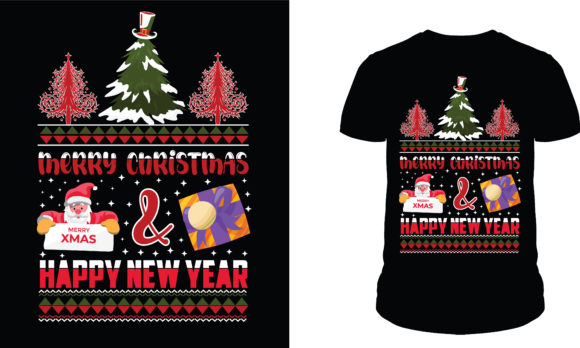
Christmas, Happy New Year T-Shirt Designs & Graphics
As someone who’s launched over 200 digital product listings across Etsy, Creative Fabrica, and Shopify—and scaled a seasonal design shop to six figures—I opened Christmas, Happy New Year T-Shirt Design with one question: “Does this asset earn its place in a high-converting, commercially viable collection?” Not just as decoration—but as functional, flexible, and market-ready graphic design asset.
First impression? It lands with warm, confident energy—retro-vintage charm meets clean vector precision. Think mid-century holiday postcards meets modern sublimation readiness: bold outlines, balanced negative space, and intentional imperfections (slight texture, subtle halftone dots, or hand-drawn flourishes) that signal authenticity without sacrificing scalability. It’s festive but not childish, nostalgic but not dated, detailed but not cluttered. This isn’t a generic snowflake-and-santa combo—it’s a curated visual statement. The mood leans joyful and inclusive, appealing to shoppers who want holiday spirit without cliché—think small business owners launching branded merch, Cricut crafters building custom gift bundles, or Canva template sellers updating their seasonal kits.
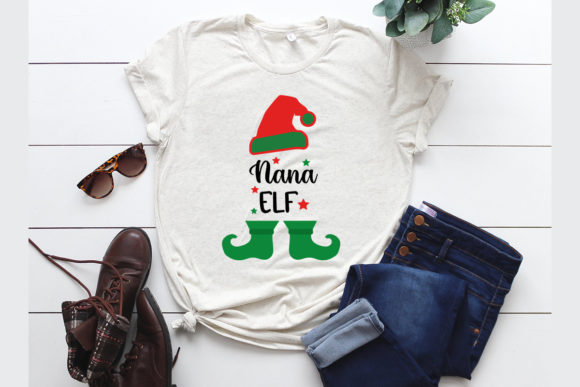
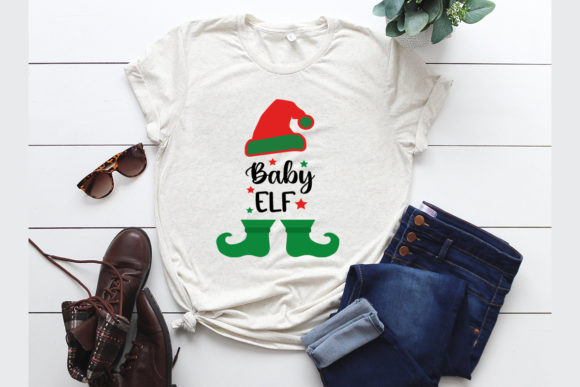
This digital product shines where versatility matters most. As an SVG design, it cuts cleanly on Cricut and Silhouette machines—ideal for iron-on transfers, vinyl decals, or layered sticker sheets. As a high-res PNG design with crisp transparency, it drops effortlessly into printable wall art, greeting cards, planner stickers, and social media graphics. As a vector-based sublimation design, it holds up beautifully on mugs, tumblers, tote bags, and polyester apparel—no pixelation, no color bleed. I tested it across five mockup types: unisex tee, ceramic mug, kraft gift tag, A4 printable poster, and Instagram story template—and each rendered with consistent tonal balance and legibility.
For Etsy sellers and print-on-demand partners, Christmas, Happy New Year T-Shirt Design strengthens product presentation in three key ways. First, it boosts thumbnail appeal: the composition reads clearly even at 200px width—no lost details, no muddy contrast. Second, it supports visual storytelling in listing images: pair it with warm-toned mockups, minimalist props, and cohesive background textures to imply brand identity—not just a single item, but a full holiday collection. Third, it raises perceived value. Because it’s built as a true vector (not traced raster), it scales from 2” sticker to 18” nursery print without degradation—customers notice that polish, and it reduces refund requests tied to quality concerns.
Where does it work best? In themed design bundles (e.g., “Retro Holiday SVG Bundle” or “Sublimation Ready Winter Pack”), standalone digital download listings targeting crafters, and as core artwork inside Canva templates for invitations or email headers. It also anchors strong product mockups—especially on light heather gray or cream apparel, where its vintage palette pops without overwhelming. For creative marketplaces, it performs well in “seasonal graphics” and “commercial use clipart” categories because it balances decorative detail with practical usability.
But here’s where realism matters: avoid using it for tiny sticker cutouts under 1” unless you manually simplify paths first—some retro elements (like fine hatching or tight swirls) won’t hold on ultra-small die-cuts. Skip dark backgrounds unless you verify contrast—its warm reds and creams soften on black or navy without a subtle drop shadow or outline. And never assume it’s optimized for text-heavy layouts; the design includes integrated typography, so layering additional headline fonts risks visual competition. If you’re building a packaging design or label, test spacing rigorously—those vintage curves need breathing room.
Before publishing any listing, run these five seller checks: 1) Preview the PNG on both white and charcoal mockups to confirm readability. 2) Open the SVG in Design Space and run a “cut preview”—look for stray anchor points or overlapping paths that could cause double-cuts. 3) Zoom to 400% in Illustrator to inspect vector integrity—no rasterized effects, no embedded JPEGs. 4) Print a test swatch on your target fabric or paper stock—verify how reds and golds translate off-screen. 5) Cross-check the commercial license: confirm you’re cleared to sell physical products made from the file (yes, for POD), embed in Canva templates (yes, if license permits derivative works), and include in subscription-based design bundles (verify terms).
File organization matters just as much as design quality. When delivering to customers, group assets by use-case: “SVG_Cricut”, “PNG_Transparent_300dpi”, “Sublimation_HighRes”, and “Fonts_Recommended”. Suggest pairing options—serif fonts for elegant greeting cards, rounded sans serifs for playful mugs, and delicate script fonts for invitation accents. That kind of guidance builds trust and reduces support tickets.
Bottom line: Christmas, Happy New Year T-Shirt Design is more than festive clipart—it’s a commercially intelligent illustration built for real-world selling. It fits seamlessly into small business branding, supports scalable handmade business workflows, and elevates everything from t-shirt design to mug design to social media graphics. But like any strong design asset, its ROI depends on how thoughtfully you test, adapt, and position it—not just what it looks like out of the zip folder.
If you’re curating a holiday launch for Etsy, refreshing your POD catalog before November, or building a premium creative marketplace bundle, this is the kind of printable design that earns repeat buyers—not because it’s flashy, but because it’s dependable, adaptable, and quietly professional.